
Disclaimer: no AI tools were used in the writing of this blog. The content is solely written by me.
So it’s been a while since I wrote a blog – around 4 years. Life has been busy! I’ve spent the last three years deep in the AI code assistant space and let me tell you: it’s been intense! I just switched to a new role that’ll be even more challenging but one I’m super excited to take on. Perhaps I’ll write about it sometime in the next 4 years.
This topic is one I’ve been meaning to write about for years. Millennials like myself are getting into the latter half of our careers and I’ve definitely noticed a bit of a transition where more people are being sent my way for career advice in a variety of forms and I’m being invited to more panels/events on the advice-giving side instead of the advice-receiving side. This is something I truly love. I consider my career to be a success thus far and a large part of that is due to many mentors and sponsors over the years. This is my opportunity to give back, and I hope to be able to make a positive difference to as many people as reasonably possible.
One question I frequently ask people is whether they know the difference between mentorship and sponsorship. Almost all do not, which is why I wanted to write this down. There was also a recent example of sponsorship that motivated me to finally put my thoughts on (digital) paper, which I’ll cover here to really emphasize the point. There are probably better, more formal definitions out there however what you’ll read here is my perspective based on my experiences.
Mentorship
I consider mentorship to be a transactional relationship. This sounds like something hollow or less valuable but it’s not. It’s more of a description of the operating model of a mentor-mentee relationship. There is immense value in having a variety of mentors whom you can go to for advice. The relationship can come in many forms. Some are multi-year relationships on a regular schedule. Some are one-time sessions. The relationship can be between people on the same team, the same organization, anywhere in the company, outside of a company, and even from different industries. The mentee comes with a situation or two that they need help with and the mentor provides the best advice they can, which is where the mentee derives value from the relationship. The topics are infinite. By the way, mentors also gain value by listening to and learning from the mentee.
Some personal examples:
- Back in 2008 I worked on IBM’s acquisition of Cognos. After delivering some good results for the project I had built enough rapport to ask the Integration Executive to be a mentor, and we met quarterly for a couple of years where I’d ask him about the project itself, career advice, insight on company politics, etc. One specific piece of advice he gave me around taking care of people in an acquisition is something that helped me when I became an Integration Executive 15 years later in 2023!
- I’ve mentored someone since around 2020 where we meet 3-6 times a year and cover all sort of topics including building stronger business relationships, navigating re-orgs, handling employee situations, and more.
- I’ve had numerous people reach out in the past couple of years asking about how to transition into a product management career path, and I share my experience going through that same journey.
The point here is that the mentor helps with the problem of the time with the best advice they can give, and over time the mentee gains experience-based insights on how to solve their problems.
I always advise people to have a minimum of three mentors: someone senior on their team, someone in their org, and someone outside of their org. Getting a mentor is generally not hard; most senior leaders are willing to spare a few hours per year per mentee. However not enough people take advantage of this and I often hear regret from those 5-15 years into their career who suddenly realize they haven’t taken advantage of mentors earlier in their career.
Sponsorship
Sponsorship is different. The simplest way I describe it is that the sponsor “vouches for you in rooms that you are not present.” This is a much deeper relationship that has the following elements:
- The sponsor is very familiar with the sponsee’s skills, accomplishments, and potential. Yes, “sponsee” is a real word albeit informal; I had to look it up.
- The sponsor is willing to put their reputation on the line for the sponsee.
- Usually the sponsor is providing/nominating the sponsee for an opportunity that they would have no way to attain themselves, because they’re typically unaware of it and not in the decision-making conversations.
Obviously gaining a sponsor is orders of magnitude harder than getting a mentor, but for meaningful career advancement I will argue it’s vital to have sponsors vouching for you. Usually the sponsor and sponsee have worked together in some context. It doesn’t have to be the direct day job; see my last blog on side gigs for examples of how to potentially gain sponsors from outside one’s immediate team. To gain sponsors one needs to deliver great business results, network, and be willing to take risks.
Some personal examples:
- Very early in my career (16ish months in) I was nominated by our organization’s leader (awesome human, now retired) to work on IBM’s acquisition of Cognos. The nomination was based on what he’d seen since I joined the org. I had no idea what integrating an acquisition was, nor did I even know anything about the acquisition beyond some news articles, yet I was asked to lead that effort because he believed in my potential. I use this example because it then led to the mentoring relationship I described above, got me my first promotion, I won some awards, etc. The point being there was a chain reaction that started from this sponsorship.
- In 2020 I was asked to take on a chief of staff role. I didn’t know the role was available, didn’t apply, and didn’t really interview beyond a 5 minute conversation on Slack. This happened because a sponsor nominated me for the role – someone I had worked for before and maintained a strong relationship with after we stopped directly working together (another amazing human). This was arguably one of the most fun jobs I’ve ever had and accelerated my career significantly; the network I gained in that role led to subsequent opportunities, led to a promotion, and continues to benefit me today.
- While in the chief of staff role we had a Townhall event where our Senior Vice President was coming to Toronto (~2022 if I recall), and we needed someone to host the event. I nominated someone whom I was mentoring at the time and was aware of her business results, and all her volunteer contributions across multiple internal volunteer groups. She did a fantastic job and that opportunity elevated her profile across our Lab, which I’m sure benefited her down the road.
Another key difference is that you don’t really ask for someone to sponsor you. As mentioned earlier you need to deliver exceptional results and ensure as many senior people as possible know about you; sharing with mentors is one way but not the only way. The person will determine themselves whether they want to sponsor you.
My biggest sponsorship (to date)
This story is being shared with permission.
In November 2025 Sanah joined my team as an aspiring product manager, transitioning in from a technical design role. We needed help in a complex space related to Java modernization and she dove right in simultaneously learning the PM profession and the Java space. Over the space of a few months I was impressed with her ability to learn quickly, attack the hard problems I was assigning her head on, and her overall poise under pressure. She reminded me of me at the same stage of my career, and I could tell she had a lot of potential.
In April 2026 I was pulled into an executive level discussion about finding someone to go on stage during a keynote at IBM THINK 2026 in May. I nominated Sanah and the team agreed with my recommendation. Keep in mind that THINK keynote speakers are generally GM, SVP, or CEO level along with C-suite executives from our clients. The disparity in experience level was immense but I felt she could do it. The key point here is that Sanah had no way to get this opportunity herself; it was only possible because someone in a position of authority nominated her for it in a forum that she wasn’t present. This is the literal definition of sponsorship.
I let her know and I’m sure after probably wanting to puke ten times she graciously accepted the challenge. Fast forward to the event and she did an unbelievable job on stage; numerous people shared feedback with me that she was a natural up there and how impressed they were with her.
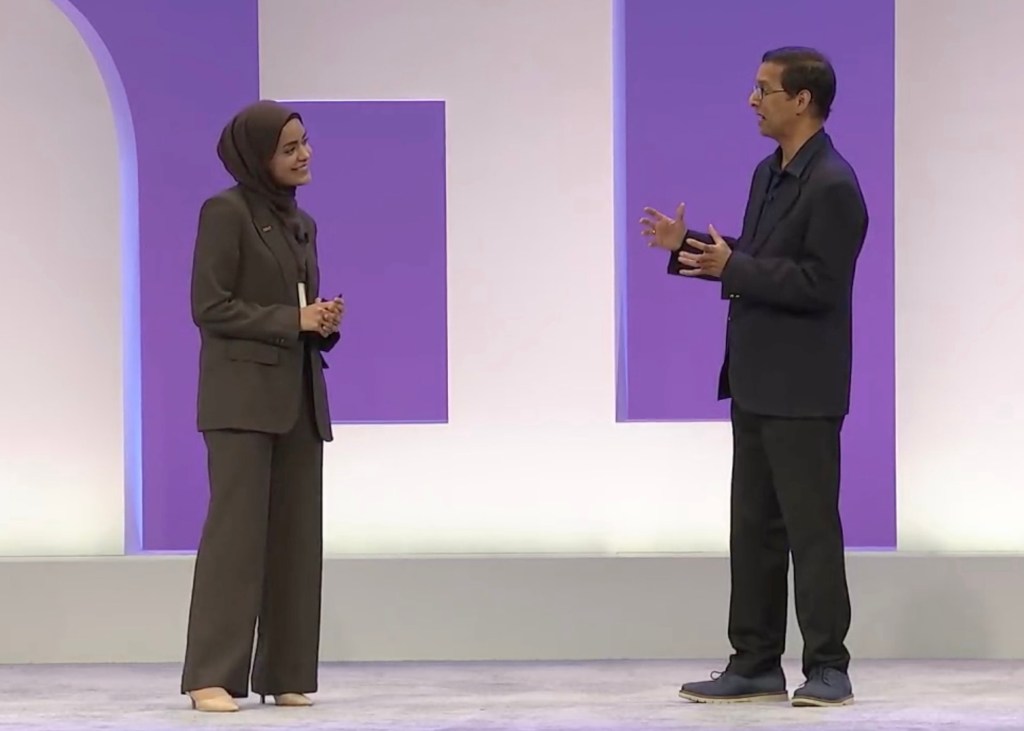
It’s only been a month so time will tell how this opportunity will benefit her career but it’s clear this opportunity put her on the map in front of thousands of people that normally would have no idea who she is. It’s now on her to capitalize on her visibility to accelerate her career growth. I joked with her that when she’s my manager one day I hope she’s kind on my annual reviews.
Conclusion
It’s important you know the difference between mentors and sponsors, and work towards having multiples of both. My last five roles all came about due to some combination of mentors and/or sponsors (via networking in some cases) and I’m sure my next ones will too. If you don’t have at least one mentor, today is the best day to address that gap. And if you’re doing great work, ensure many senior people know about it so that you can potentially earn sponsors.
 A Millennial Leader